
Formation · 8 min read
BIM skills matrix: modeller, coordinator, BIM manager
By Mickael Quinart · 9 October 2026
Which skills should each BIM role have in an engineering firm? A level-based matrix to recruit, train and grow teams.
As Mickael Quinart, BIM/CAD Consultant at PALLADION, I am delighted to enhance this article to make it a comprehensive educational guide on assessing and developing BIM skills within your teams.
Different Roles, Different Skills
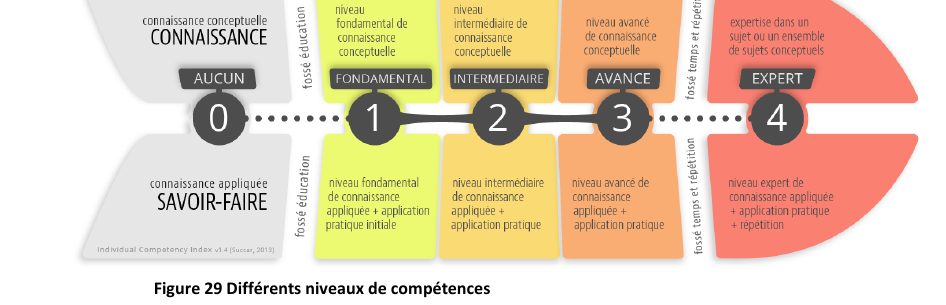
BIM introduces new roles that do not require the same knowledge. Using a skills matrix by role allows for objective team assessment and the construction of a targeted training plan, based on a 0 to 4 level scale (none, foundational, intermediate, advanced, expert).
This structured approach is essential for driving digital transformation effectively and sustainably. It ensures that each team member possesses the necessary aptitudes for their position and contributes fully to achieving project and company objectives.
The Role-Based Matrix
The matrix we present here is a robust example, but it must be adapted to the specificities of each organisation and project. It highlights the diversity of required skills and the nuances between key BIM roles.
| Skill | Modeller | Coordinator | BIM Manager |
|---|---|---|---|
| Domain Knowledge (structure, M&E, etc.) | 3 | 3 | 2 |
| Software Modelling | 3–4 | 2–3 | 2 |
| Templates and Families | 2 | 3 | 3 |
| Open Formats IFC / BCF | 1–2 | 3–4 | 3 |
| Clash Detection and Management | 1 | 4 | 2 |
| BIM Protocol, Standards | 1 | 3 | 4 |
| Management, Project Control, Budget | 0–1 | 2 | 4 |
Skill Level Details
- Level 0: None. The employee has no knowledge or practical experience in this area.
- Level 1: Foundational. The employee has basic notions, can perform simple tasks under supervision.
- Level 2: Intermediate. The employee is autonomous for common tasks, can solve standard problems.
- Level 3: Advanced. The employee is highly competent, can train others, manages complex cases.
- Level 4: Expert. The employee is a reference, innovates, defines methods, masters the most complex cases.
How to Use the Matrix
- Self-assessment by the employee, followed by discussion with their manager. This step promotes the employee's engagement and accountability in their professional development.
- Identification of gaps between current and target levels. The gap analysis must be shared and accepted by the employee.
- Prioritisation: gaps that hinder production are addressed first. It is crucial to identify critical missing skills that impede project progress.
- Applied training on a project, then re-evaluation. Training must be practical and directly applicable. Re-evaluation allows for measuring training effectiveness and adjusting the plan if necessary.
This iterative method ensures continuous and relevant skills development.
Practical Example in a Design Office
Imagine a design office specialising in structures, which has decided to integrate BIM more deeply into its processes. The company is working on increasingly complex projects and wishes to optimise collaboration with other disciplines.
An experienced design engineer, with excellent domain knowledge in structural analysis but less familiar with parametric modelling tools and exchange formats, wishes to move into a BIM Coordinator role.
Using the skills matrix, the company identifies the following points:
- Domain Knowledge (structure): The engineer is at level 3-4, which is excellent and essential for a structural coordinator.
- Software Modelling (Revit Structure, Tekla Structures): They are at level 2, sufficient for consultation and verification, but a level 3 would be ideal for a better understanding of the modellers' challenges.
- Open Formats IFC / BCF: They are at level 1. This is the critical point. Without a good command of IFC for exports/imports and BCF for comment management, their role as coordinator is severely limited in a multi-software environment.
- Clash Detection and Management (Navisworks): They are at level 1. Similarly, this is a major deficiency for a coordinator whose role is to synthesise models and identify inconsistencies.
- BIM Protocol, Standards: Level 1. A thorough understanding of BIM Execution Plan (BEP) requirements and standards like ISO 19650 is fundamental.
The training plan will then be targeted at:
- In-depth training on the use and understanding of IFC (file structure, properties, object classes) and BCF for communicating comments.
- Practical training in clash detection and coordination in software such as Navisworks Manage or Solibri Model Checker.
- A workshop on the application of BIM standards (e.g., ISO 19650) and critical review of a BEP.
These training sessions will then be applied to a pilot project, allowing the engineer to consolidate their new skills and be re-evaluated. The objective is to quickly bring them to level 3-4 in open formats and clash detection so that they can fully assume their role as a structural BIM Coordinator.
Best Practices / Common Mistakes
| Best Practices | Common Mistakes |
|---|---|
| Adapt the matrix to the specificities of the company and projects. | Using a generic matrix without customising it. |
| Involve employees in their self-assessment and goal setting. | Imposing evaluation and training plans without discussion. |
| Prioritise training on skills that block production. | Diluting training across too many topics at once. |
| Favour practical training and application on real projects. | Limiting training to theoretical sessions or tutorials without concrete implementation. |
| Regularly re-evaluate skills and adjust the development plan. | Neglecting re-evaluation, considering training as a definitive acquisition. |
| Promote knowledge sharing among employees. | Siloing individual skills without sharing them. |
| Consider standards (e.g., ISO 19650) as a framework for processes. | Viewing standards as mere administrative constraints. |
| Use interoperable tools (IFC, BCF) for collaboration. | Remaining confined to proprietary formats, limiting exchange. |
Step-by-Step Implementation Method
- Define key BIM roles within your organisation (Modeller, Coordinator, BIM Manager, CDE Specialist, etc.) and their exact responsibilities according to your BIM maturity and objectives.
- Adapt the existing skills matrix by adding, deleting, or adjusting skills specific to your context (e.g., specific business software, particular client requirements, or expertise areas unique to your activity).
- Conduct the initial employee assessment. For each defined role, ask each team member to self-assess, then discuss with their manager to compare perceptions and establish a consensual evaluation.
- Identify gaps and prioritise training needs. Compare current levels to target levels for each role. Prioritise skills that are essential for current or upcoming projects and that represent major bottlenecks.
- Develop individual and collective training plans. Define the training modalities (internal, external, e-learning, mentoring) for each priority skill. Include clear objectives and deadlines.
- Implement training and ensure follow-up. Ensure that training is applied to concrete cases or real projects. Organise regular check-ins to monitor progress and conduct periodic re-evaluations to measure skill evolution.
A Clear Career Path
The matrix also outlines career paths: a CAD drafter becomes a modeller, then a coordinator; an engineer with a strong methodological background can evolve towards BIM management. This clarity directly addresses the teams' needs for esteem and accomplishment. It contributes to talent retention and overall motivation, by offering clear and rewarding career prospects.
Common Errors
- Believing that an excellent modeller will automatically make a good coordinator. The modeller excels in model production, while the coordinator must synthesise, communicate, and resolve conflicts—very different skill sets.
- Neglecting domain knowledge in "purely software" profiles. BIM is not just about tools; a solid understanding of design and construction processes is fundamental.
- Never re-evaluating the matrix. Technologies evolve, and so do projects. The matrix must be a living document, revised annually or with each major change.
- Confusing software acquisition with BIM skill acquisition. Mastering Revit does not mean being an expert in interoperability or BIM data management.
- Ignoring the role of standards such as ISO 19650, which defines the framework for information management throughout the life cycle of a built asset.
Points of Vigilance
- Company Culture: The success of this approach heavily depends on a culture of openness, sharing, and continuous learning. Resistance to change can hinder even the best intentions.
- Time/Financial Investment: BIM skill development is a significant investment in time for employees and budget for training. It is crucial to plan for this and justify it by the long-term return on investment.
- Interoperability: Do not underestimate the importance of open formats such as IFC (Industry Foundation Classes) for structured data exchange and BCF (BIM Collaboration Format) for communicating issues. These formats are key to multi-software and multi-stakeholder collaboration. Tools like Revit, ARCHICAD, Tekla Structures are modellers, but tools like Navisworks, Solibri Model Checker are essential for coordination and clash detection, relying on IFC.
- Technological Evolution: The software landscape and BIM practices are evolving rapidly. Regular technological watch is essential to maintain the relevance of the skills matrix and training programmes.
- Data Management: Beyond 3D models, BIM is primarily about data management. Skills in structuring, verifying, and exploiting information (for example, through a CDE - Common Data Environment) are increasingly crucial.
Key Takeaways
- Each BIM role has its own skill profile.
- The matrix objectifies evaluation and targets training.
- It makes motivating career paths visible.
- A structured and iterative approach is essential for effective and sustainable skill development.
- Interoperability and adherence to standards (e.g., ISO 19650) are pillars of BIM collaboration.
Article based on the professional thesis "BIM transition and optimised deployment, applied in an engineering firm".
Mickael Quinart, PALLADION
Want to go further?